
We would like to share new findings from the BISON-PRO Quality of Life Study, focused on financial toxicity in people living with lymphoma and chronic lymphocytic leukemia (CLL).
“Financial toxicity” means the financial stress, worry, or hardship that can come with a cancer diagnosis and its treatment. This can include the cost of treatment, insurance issues, travel, time away from work, extra caregiving needs, and the emotional burden of trying to manage these costs while also focusing on cancer treatment and wellbeing.
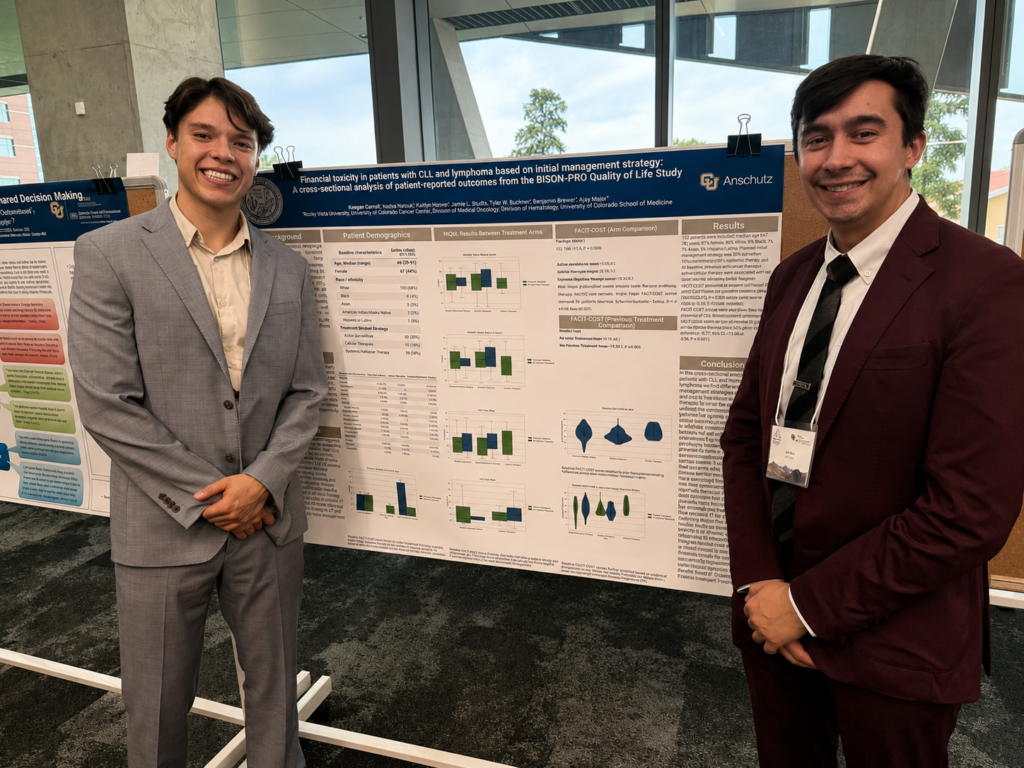
Keegan Carroll, a medical student at Rocky Vista University, presented a poster abstract at the Colorado Pragmatic Research in Health Conference (COPRH Con) in conjunction with Dr. Ajay Major, the principal investigator of BISON-PRO.
What we did:
We analyzed baseline survey responses from 152 people with lymphoma and CLL who enrolled in the BISON-PRO Quality of Life Study.
Participants were grouped based on their planned initial management strategy:
- Active surveillance, also called “watch and wait”
- Systemic or radiation therapy
- Cellular therapy, such as stem cell transplant or CAR T-cell therapy
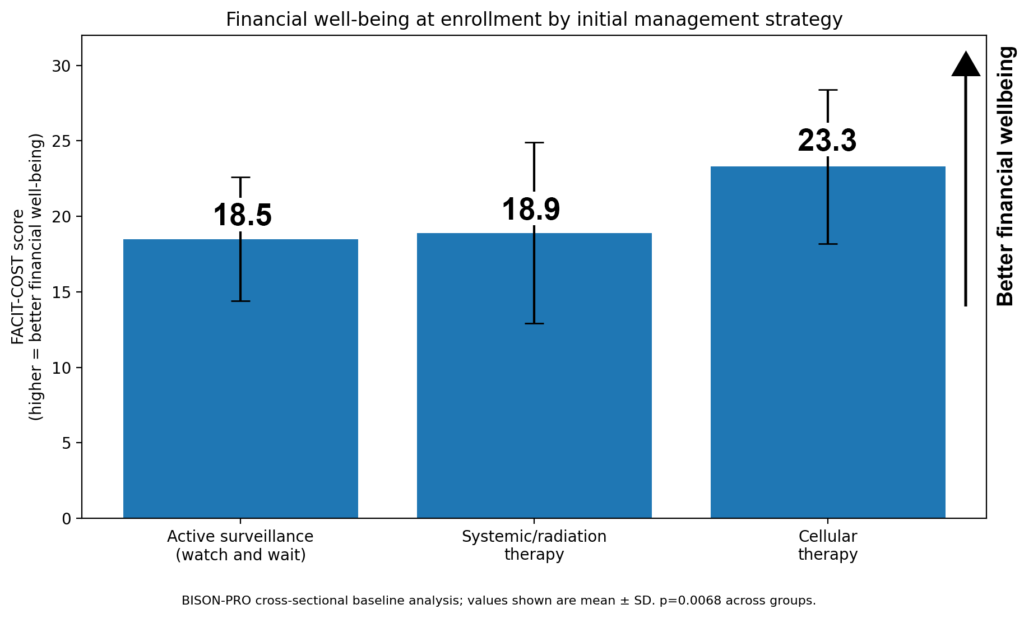
We used a survey called FACIT-COST to measure financial toxicity. Higher scores on this survey mean better financial well-being and less financial distress.
We also looked at whether financial toxicity differed based on whether someone had received prior anti-lymphoma treatment before enrolling in BISON-PRO.
What we learned:
People who were planning to receive cellular therapy reported higher financial well-being scores than people planning active surveillance or systemic/radiation therapy.
This is an important and somewhat unexpected finding. Cellular therapies can be intensive and often require frequent visits, hospitalization, caregiver support, travel, and time away from usual activities, all of which can cause worsening financial distress. We believe our findings may reflect differences in the people who are referred for cellular therapy, the support systems around them, insurance coverage, employment status, or other financial factors that we need to study more carefully.
We also found that people who had received prior anti-lymphoma treatment had similar financial well-being scores to people who had not received prior treatment.
One key message from this study is that financial stress can affect people even before treatment begins. Patients on active surveillance — who are not yet receiving cancer-directed therapy — may still experience financial worry related to appointments, testing, uncertainty, time away from work, travel, insurance, and other costs of care.
Why this matters:
Financial stress is an important part of quality of life. It can affect daily life, emotional well-being, treatment decisions, and the ability to receive cancer care.
These findings suggest that financial toxicity screening and support should not only focus on people receiving active treatment. People on active surveillance, as well as people with newly-diagnosed lymphoma or CLL, may also benefit from early conversations about financial concerns, insurance questions, travel needs, work disruptions, and available support services.
By collecting patient-reported outcomes directly from patients, BISON-PRO allows us to study these experiences in a real-world setting and identify groups of patients who may need additional support.
Next steps:
The BISON-PRO Quality of Life Study is continuing to grow!
Thanks to ongoing support from the University of Colorado Cancer Center and new philanthropic support from a grateful patient, we are continuing to enroll new participants and collect follow-up surveys from people who have already joined the study.
In the coming year, the BISON-PRO team is also working on several new analyses, including:
- long-term quality of life in patients receiving different anti-lymphoma therapies
- changes in symptoms, sleep quality, and physical recovery over time
- how useful patients find the BISON-PRO survey process
- how BISON-PRO data may help guide supportive care for future patients
We are also exploring ways to use BISON-PRO survey information to give more useful feedback to patients and clinicians in the future.
Thank you!
On behalf of the entire BISON-PRO research team, thank you to every participant who has completed surveys and helped make this study possible. Your responses are helping us better understand parts of the cancer experience that are not always visible during clinic visits.
If you have any questions, comments, or suggestions about the BISON-PRO Quality of Life Study, please email us.